Martha Kicsiny milled wooden 'Frames of Feudalism'
Frames of Feudalism
As a guest researcher at KASK, Martha Kicsiny experimented with the CNC milling machine to create a series of wooden frames, reconsidering the relationship between images and their frames.
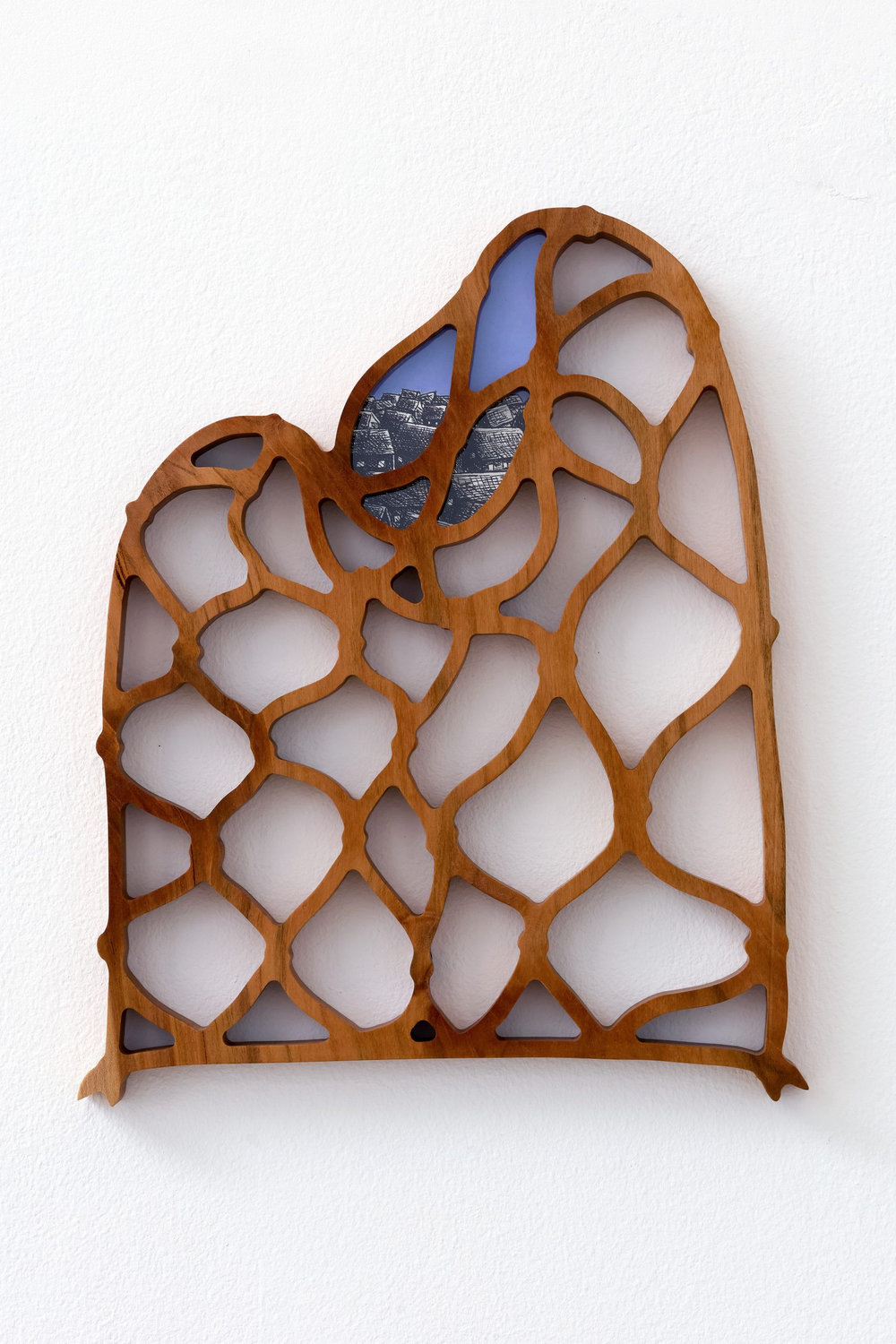
Image: Degrees of Freedom
She developed the series for her exhibition titled Celestial Domain, which deals with the topic of technofeudalism. A central motif is the net, exploring it as a symbol ranging from the fences of enclosures to the internet, which harvests our attention. Alongside her 3D-printed lithophanes, which reflect on current power structures formed by the internet, her pieces combining wooden frames with ink and acrylic paintings address the feudalism of the Middle Ages. The unique shapes of the frames experiment with incorporating this symbol in relation to the image.
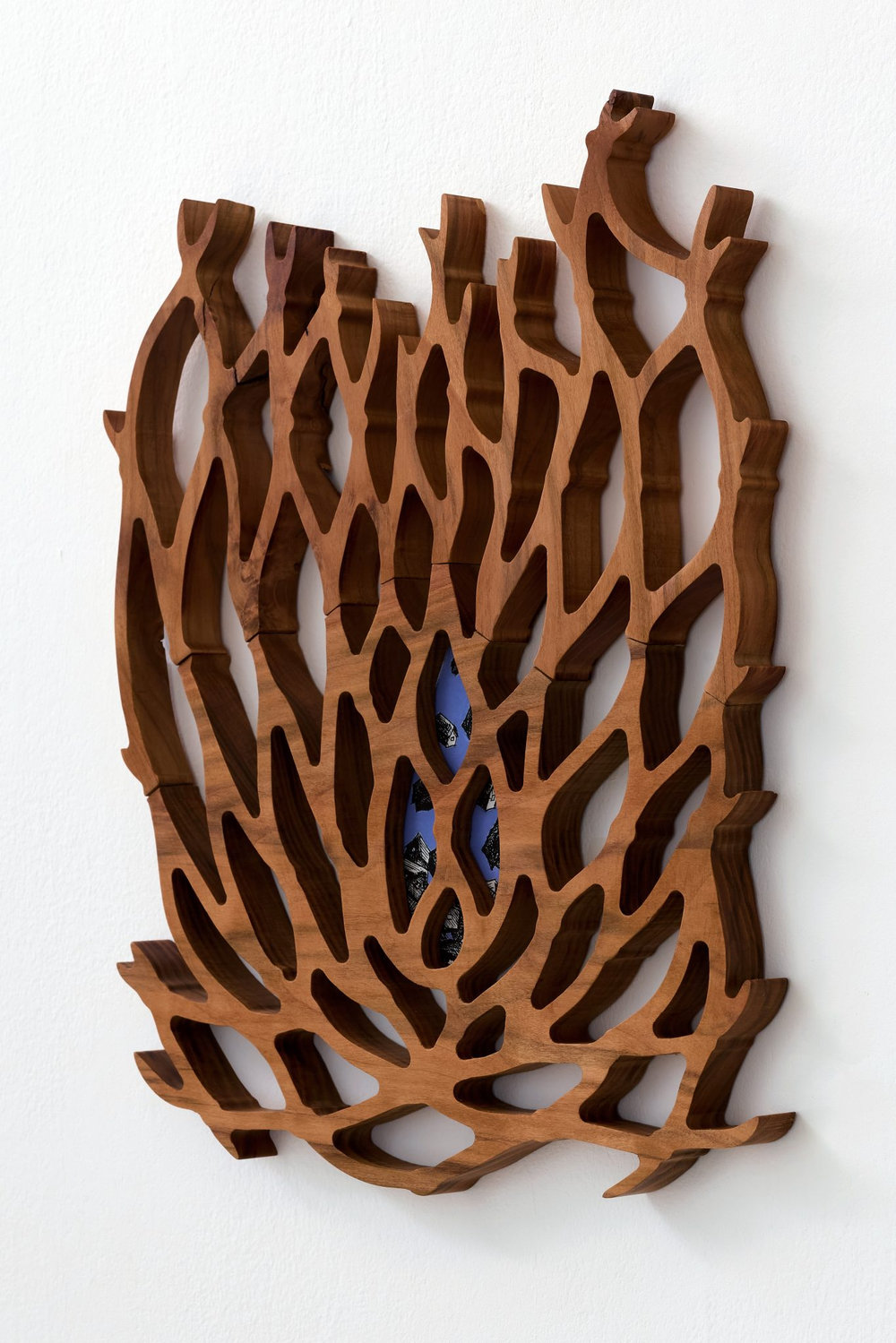
Image: Critical Mass
Upon arriving in Ghent, she was inspired by the Ghent revolts that took place between the 14th and 16th centuries. Her pieces, entitled Critical Mass and Degrees of Freedom, focus on the dilemma of how a strong urban community could withstand the pressures of feudalism for a time. However, as many struggles for independence, once a certain threshold is crossed, the power they resist crushes their fight for independence. Today, it can be vital to learn from history to get to know strategies of resistance and learn from their success and failures.
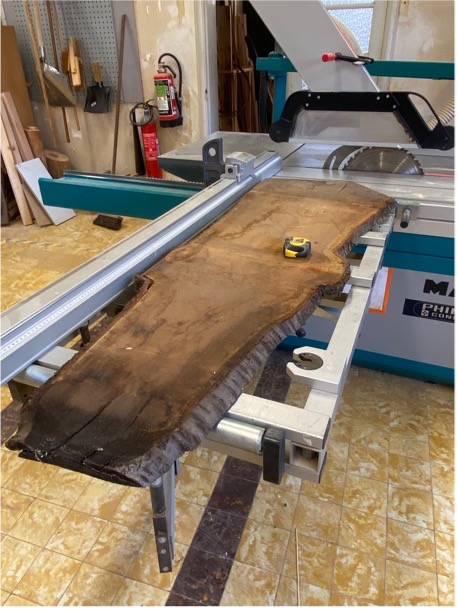
Image: The original slab of cherry tree
Martha developed a workflow of drawing the shape of the frames and converting them into vectors. The wood used was locally sourced cherry tree wood from the Wood Atelier, prepared into slabs that fitted the milling machine. In the next step she created the code for milling in Fusion 360, taking into consideration friction and the potential burning of the wood if the milling bit would generate too much heat. Slowing down the milling in narrow corners was essential to avoid the wood cracking.
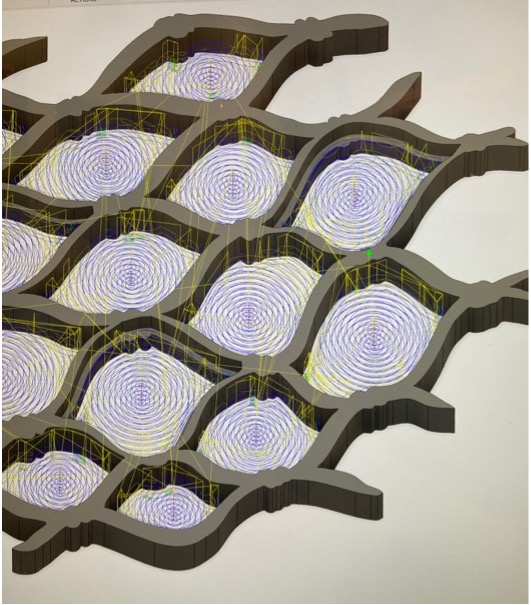
Image: Simulation of the milling toolpaths
She had previously experimented with milling extremely thin wooden frames that could act as lithophanes (images visible when backlit). However, wood only lets light through when it is very thin, a millimeter or less, which made the wood highly prone to chipping. When milling wood, we placed masking tape on the milling bed and onto the slab of wood, then glued the two surfaces of masking tape together. Unfortunately, this was not enough to stop the bowing of the wood, which caused imprecise milling and an even higher risk of chipping. This is why she chose to abandon the goal for making the wood translucent and instead focus on creating frames that have unique shapes with symbolic meanings, similar to the frames of her 3D printed lithophanes.
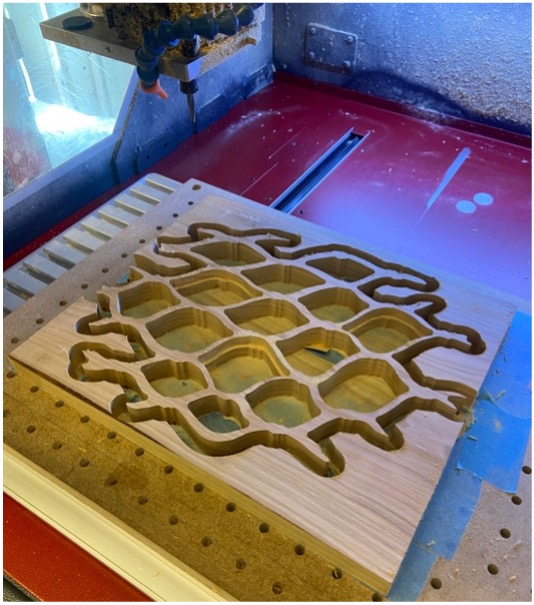
Image: The result of milling
This project was supported by the Eötvös Hungarian State Grant for doctoral students, and by the guidance and assistance of Elias.
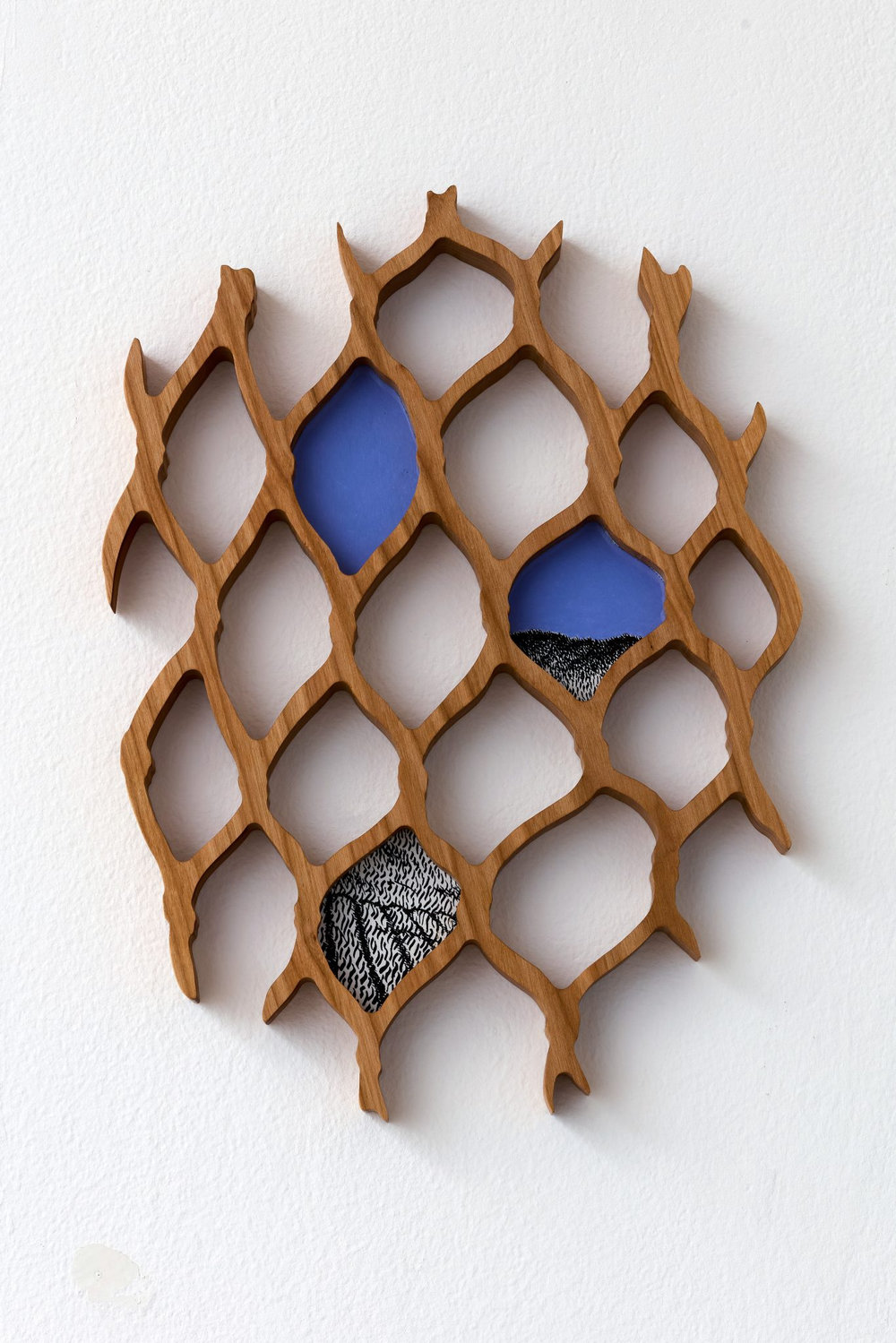
Image: Fine Net (2025) after sanding and oiling the wood
Read more about the exposition 'Celestial Domain'.